Is there anything more frustrating than investing in a high-quality athletic windscreen, only to see it sagging or flapping in the wind a few weeks later?
A poor installation doesn’t just look bad—it acts like a sail, putting unnecessary stress on your fence and the screen material.
To help facility managers, coaches, and contractors get it right the first time, we have compiled our field experience into a brand new resource: The Pro-Installer’s Guide to a Perfect Windscreen Fit.
Sneak Peek: Top Tips from the Guide
Our new guide covers the essential steps to ensure your fence looks crisp, clean, and wrinkle-free. Here are just a few “Pro-Prep” secrets we share in the document:
- Watch the Weather: Never attempt an install on a windy day. Wind can instantly turn your screen into a sail, making it dangerous and difficult to handle.
- Find the “Front” and “Top”: Always install with the smooth, finished side facing the field. Unsure which side is up? Remember that air vents (half-moon cutouts) always go at the top.
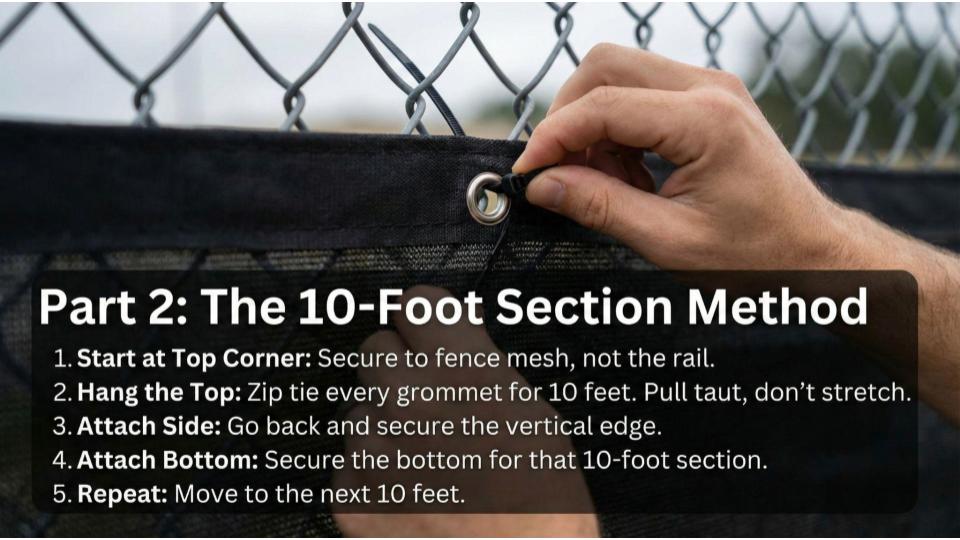
- The 10-Foot Section Method: Don’t try to hang the entire top edge at once. Our guide details how to work in 10-foot sections—securing the top, then the side, then the bottom—before moving on. This specific sequence is the key to preventing wrinkles.
Avoid The #1 Mistake: Skipping Grommets
The most common error we see is skipping grommets to save time. This creates uneven tension points where the wind can tear the material out.
- The Fix: Zip tie every single grommet.
- The Hardware: Ensure you are using 50 lb. UV-resistant zip ties that won’t become brittle and break in extreme weather.
Get the Full Walkthrough
Whether you are upgrading a tennis court, a baseball outfield, or a construction site, this guide is your roadmap to a flawless finish. It even covers critical details like how much gap to leave at the bottom for mower clearance.